
Retail businesses have certainly bloomed in the past months for one apparent reason – the pandemic. Social distancing and quarantine pushed traditional stores into huge losses, prompting many to switch to online sales and eCommerce. According to Forrester, this industry faces around $2.1 billion in losses on a global level.
Now that we’re slowly getting back on our feet, the retail market has a chance to grow even further – both online and offline. However, as your business grows and develops, it gets harder to keep track of everything. With such immense competition, most retailers need a bit of assistance to keep customers happy and their inventory full.
With technology advancing and the business world changing at an unbelievable rate, retailers turned to digital transformation to seek salvation. This is where using retail software comes into play. This is a computer software used to streamline businesses’ retail management processes and this is how they bridge the offline-online gap, keep people happy, and eliminate or minimize errors in their work.
If you are interested in using retail software to boost your business, you’ll find all the information you need right here.
Types of Software Retailers Use Today
Software developers are well aware of the growth in the retail industry. They seem to do wonders in terms of catering to this sector. Today, there are many amazing solutions to help all kinds of retail operations.
From eCommerce platforms to social media systems to inventory management systems, there’s a lot that you can do with ease and minimal effort today. Here are the few major types of software in the industry:
- eCommerce selling platforms
- Social media marketing
- Retail inventory management using inventory software
- Retail management
- Metrics and analytics solutions
- Payment processing
- Customer relations management

Depending on which software you choose, your business can reap a range of benefits. You can fulfill your retail business’ tasks faster, with more accuracy, and more efficiently. From automation to accurate and useful reporting, such tools can turn your business around and optimize all of its processes.
Top choices for retail software for 2021
Some solutions are better than others, more affordable, and therefore – more popular. Here is a list of the best-rated, most effective tools you should be used in retail:
1. Lightspeed
Retailers these days are amazed by Lightspeed’s point of sale software. This solution allows you to manage entire operations from any location and at any time. With a seamlessly working eCom manager, this retail software allows for faster checkouts, accurate customer data, and better inventory management. Some of the things you can do if you use it are:
- Make smarter decisions thanks to the built-in reports and data
- Manage special and regular purchase orders directly from the POS
- Use quick edits, custom categories, and transfers
- Use purchase histories and customers profiles to get a better picture of your target audience
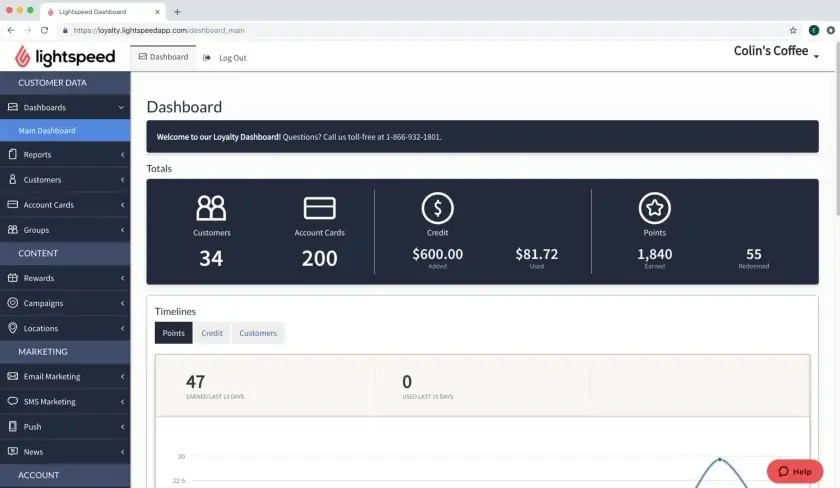
The most popular feature at Lightspeed is their eCom. Integrated directly into the software, this feature allows retailers to do everything from inventory management and shipping to customer data, marketing, and sales reports. Users can synchronize their inventory between physical and online stores, making it easy to keep track of everything – and eliminate the possibility of errors.
2. Zoho
Slightly more expensive and with fewer features compared to Lightspeed, Zoho is one of the most popular software solutions in the retail industry these days. This platform can be used for a variety of things from project management to human resources management to accounting. It’s simple to set up and has a free trial option of 30 days.
Zoho is a great tool for social media management across different platforms including Facebook, Linked In, Instagram, and Twitter. Within each of these channels, you can schedule posts, capture leads, monitor feeds, and message potential customers thanks to the tool. You can also use it to target a specific audience. However, keep in mind that you’ll need to pay extra to get access to their eCommerce capabilities.
Other features of Zoho include:
- Built-in tools for mail list management, sign-up forms creation, etc.
- Integrations with other Zoho management applications (Zoho Books, Invoice, People, and Meeting)
- Inventory management tools that allow you to keep track of invoices, vendors, and product stock
3. Shopify
Shopify reported that they’ve helped over a million businesses make a total of $155 billion by mid-July in 2020. That’s quite a lot of money, which is why this is one of the best-rated platforms for retailers these days.
This particular eCommerce solution offers you the following:
- Rich app store filled with many helpful apps
- Intuitive drag and drop interface
- Many themes to attract your customers
- Turn-key one-stop-shop business models
For those who aren’t ready to make the purchase, there’s a 2-week trial period to test the platform. Compared to other solutions in this list Shopify does not really assist with most of the tasks, but it offers you a huge reach thanks to its popularity.
4. BigCommerce
As a retailer, you probably want to scale as fast as possible. BigCommerce should help get you there. This software is packed with features and, even though it can be a bit tough to learn at first, it can offer you a lot if you know how to use it.
The cost might seem higher at first, but this includes every feature the software has to offer. Its best characteristics include:
- An extensive suite of features
- Multi-channel options
- Highly engineered SEO functionality
- Managing online and offline sales, inventory, and accounting
5. Bitrix24
With a free version available, Bitrix24 has become highly popular with retailers. However, you should keep in mind that, since it is free, this version is very limited in terms of features compared to others in this list. It is also a bit harder to operate and has limited solutions for on-site transactions and point of sale management.
If you opt for the paid plans of this too, you can find a handful of features for eCommerce and retail including:
- SEO assistance
- Website builder
- Marketing automation tools
- Multistore capabilities allowing you to sell through several online storefronts
- Store features for bundling and setting products
- HR management features for meeting info, time tracking, work reporting, and PTO management
- Built-in AI chatbot tool
While this is one of the few solutions that have a free version available, and it offers amazing features in its paid versions, it is not ideal if you want to manage onsite sales in addition to everything else. However, its free version is highly popular because it allows you to process an unlimited number of orders and venues, and sell up to 100 products.
6. Magento
Magento is an eCommerce solution that’s currently used by a quarter of million stores in the world. Its monthly plans are affordable and begin at less than $10 per month, however, you also need to pay hosting fees and additional features if you decide to use them.
Magento is very technical, which doesn’t make it ideal for beginners. It requires some coding skills and, if you pick the extensions, it can get highly expensive. Even so, it is very popular because of its customization, as well as the great inventory management features.
Some of the best features of this SEO tool with customizable URLs, meta tags, sitemap:
- Returns management
- Order management
- Merchandise tracking and management
- Multi-location feature
- Purchase order tracking
- Pricing and revenue management
There are indeed several features that you can take advantage of when using Magento for your retail business. However, like other aspects of your business, you also need to manage this eCommerce software to keep it working more effectively. This is where working with one of the dedicated Magento developers enters into the picture.
Given their experience, expertise, and skills, they can take several tasks off your plate. They can handle many technical jobs on your behalf, so you can pay attention to growing your eCommerce business. If you’re searching for the right Magento developer, you may check out some reliable online resources to obtain more information.
7. QuickBooks Commerce
QuickBooks now has a separate software solution called Commerce. This one integrates with QuickBooks, combining automated accounting features. The lower-level plans are affordable, while the more advanced options can get costly. Aside from the lack of a built-in email campaign feature, this solution is widely popular for its many options including the ability to generate a paystub from direct deposit or create a w2 online. Some of the best things about QuickBooks Commerce are:
- Inventory control features ideal for the automatic reordering of products and stocks
- Integration with QuickBooks for accounting
- Backorder management that allows for pre-orders on almost finished inventory
- Inventory management for customer purchase preferences, shipping address, billing details, and history
- Warehouse management tools for shipping, packing and receiving
- Managing multiple channels such as Amazon, Shopify, eBay, and WooCommerce
Reasons to get retail software for your business
A quality, well-implemented retail management system can help your business greatly. It’s a great way to drive more sales, direct and manage employees, manage inventory without errors, and free up some of your busy schedules.
For those who use quality software in retail, this has proven to be an amazing decision.
With a little bit of investment, you can eliminate all those expenses due to missed shipping deadlines, lack of stock, mistakes in sales, etc. Not only that, but software solutions like those offered through retail software development can offer you the following benefits:
- Increased checkout efficiency
- Improved merchandise and inventory management
- More actionable and accurate insights for customer targeting and management
- Fewer errors and therefore, fewer losses and expenses
Besides the benefits, it’s also essential to know that choosing the perfect retail software for your eCommerce business isn’t an easy task. With several good options available in the market, it can be challenging to find the right one.
To streamline your search, you may want to consider some essential factors. First, determine your business goals and software requirements. Then, factor in your prospects’ credentials by looking at their certifications and skill levels and knowing what their previous clients have to say about them. Lastly, pick a retail software provider with good communication skills to help you assess their responsiveness and availability.
Based on all this, it is about time that you decide on which solution to invest in. You should base the decision on your business’ size, its needs, as well as your preferences. This is the top-rated list among retailers, so brainstorm a bit and make your job a thousand times easier.


 Want to know how your business stacks up against the competition?





0 Comments