
The 9 Building Blocks for any Business Model are as follows:
1. Customer Segments
2. Value Propositions
3. Channels
4. Customer Relationships
5. Revenue Streams
6. Key Resources
7. Key Activities
8. Key Partnerships
9. Cost Structure
I am going to discuss each section of the business model to help you create more value not only for your business but for your customers.
1. Customer Segments
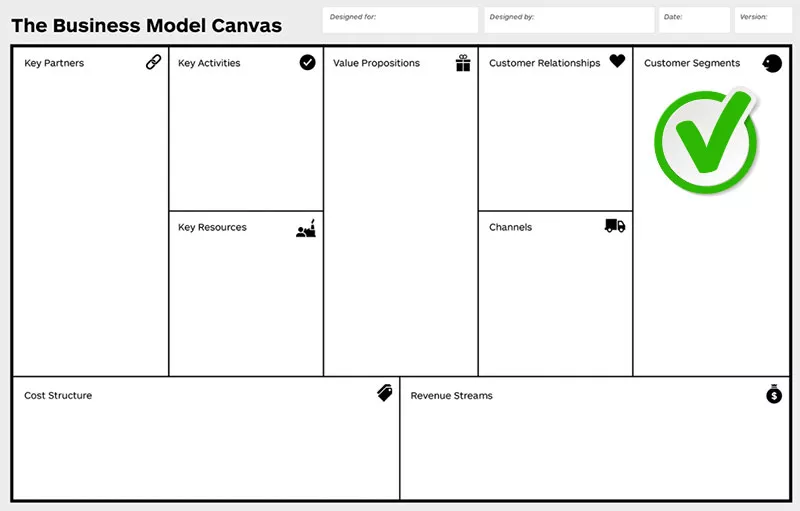
The first building block of a business model is customer segments. This defines the different groups of people or organizations that a business plans to reach. Without profitable customers, how can any business succeed? When looking at customer segments, it is important to group people into multiple segments to better satisfy their needs. The groups could be small or large depending on their common needs, behaviors, location, or attributes. With these groups, you can better understand how to communicate properly with them and find out what works best for any demographic. Once you have a clear idea of who you are providing a service for, you can make the steps towards creating value for them.
2. Value Propositions
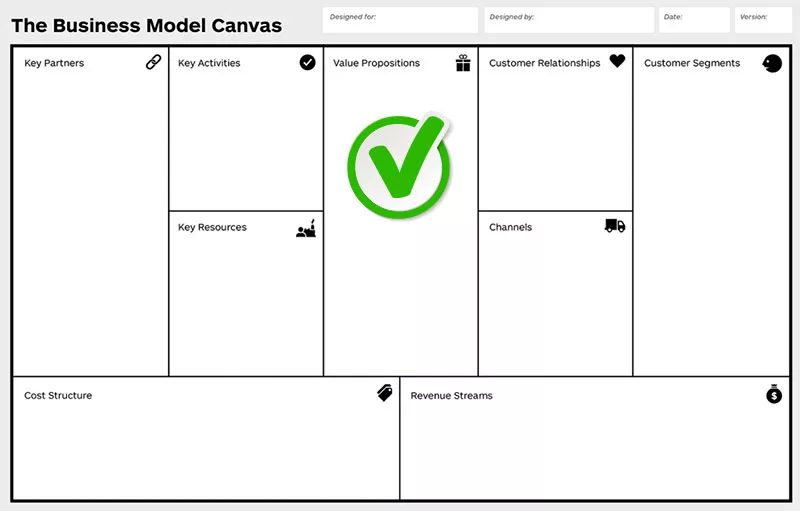
The second building block is based on how your company bundles products and services to meet each customer segment’s needs. A Value Proposition creates a unique value for customers through a mix of elements that could be qualitative or quantitative. This could include price, speed, design, or customer experience. What value do we deliver to the customer? What makes a person choose AT&T over Verizon Wireless or Sprint? Perhaps they decide to choose Virgin Mobile. Now, think about how each company offers value to its customer segments. Verizon might offer value to customers that are looking for the best cell service at an affordable price. They could also offer a great bundled deal with DISH network for a user that doesn’t want to pay two different bills. How about the customer that lives in the city with great coverage and is looking for the best price? That could be exactly what Virgin Mobile offers with a low cost and no contract involved. It is due to the value proposition that a person might want to choose one service over another. Don’t just try to offer what everyone else is with lower prices, think outside the box. It is often due to innovation and disruption that new businesses succeed. Think about how you can fill the gaps in customer needs and problems that other companies in your industry are not fulfilling.
3. Channels
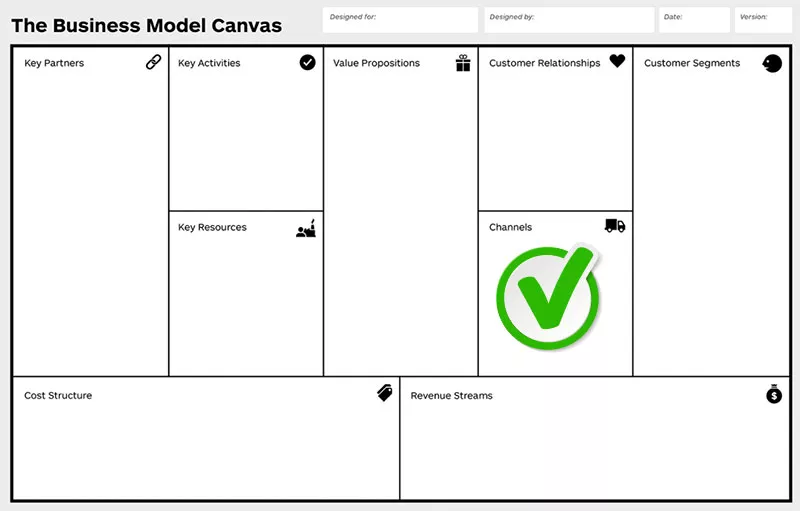
The channels building block is how your company will communicate with each customer segment, delivering them your value proposition. These channels can include social media, websites, newspaper advertisements, and word of mouth to name a few. Evaluate how you communicate which each customer segment and how you can either improve or change that communication. Also, consider which methods of communication are the most cost-efficient. It is this sort of brainstorming that will improve how you reach each customer and build a relationship with them. To help with your brainstorming session, here are 5 channel phases to build upon:
1. Awareness
How do we raise company awareness and build upon our brand?
2. Evaluation
How do we reach customers to have them evaluate our value proposition?
3. Purchase
Through which channels can we direct customers to purchasing our products and services?
4. Delivery
How do we deliver the value proposition to the customers?
5. After Sales
How do we provide customer support after purchase?
This may seem like a standard set of phases for you. Well, that is the point! These phases are in place to help build your thinking outwards towards all the possibilities to best serve your customer segments.
4. Customer Relations
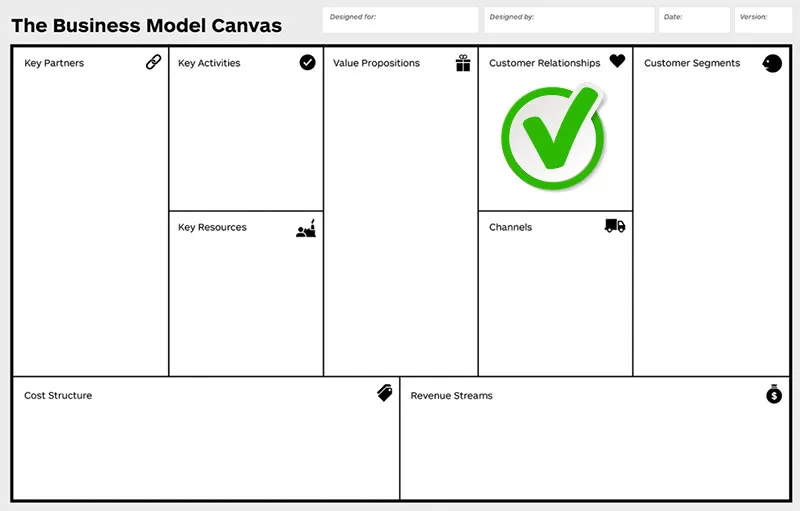
I truly believe that this part of the business model is the most important. If you build personalization into your brand and company, then the sky is the limit! Although this service can be personal or automated, it is crucial to understand which method will best serve your customer’s needs. There are three driving motives for building relationships with your customers.
- New Lead Generation
- Customer Retention
- Upselling
With these motives, rank which goals are more important to your company than the others. From there, decide which issues you might come across with these goals and how to best communicate to your customer segments in each goal.
5. Revenue Streams
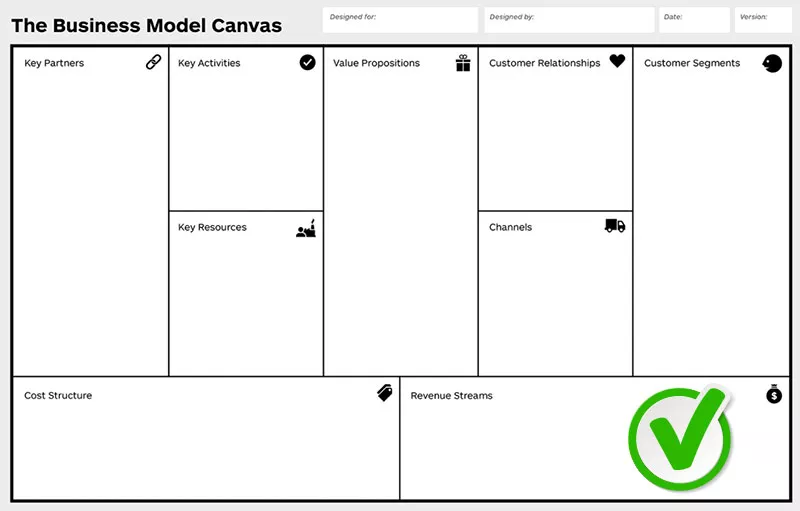
This building block measures the earnings a company generates from each customer segment. When targeting each customer segment, think about what each group is willing to pay. When you realize that different groups of customers are willing to pay at different levels, you can come up with different revenue streams to apply to each of these groups. A business model includes only two types of revenue streams:
- Transaction Revenues – This results from customers who make one payment for a product or service.
- Recurring Revenues – These ongoing payments can include a prolonged value proposition or post-purchase customer service.
When deciding which type of revenue stream fits well in the communication with a customer segment, ask yourself: How are they currently paying? How would they prefer to pay? Does a certain method of revenue contribution to overall earnings?
6. Key Resources
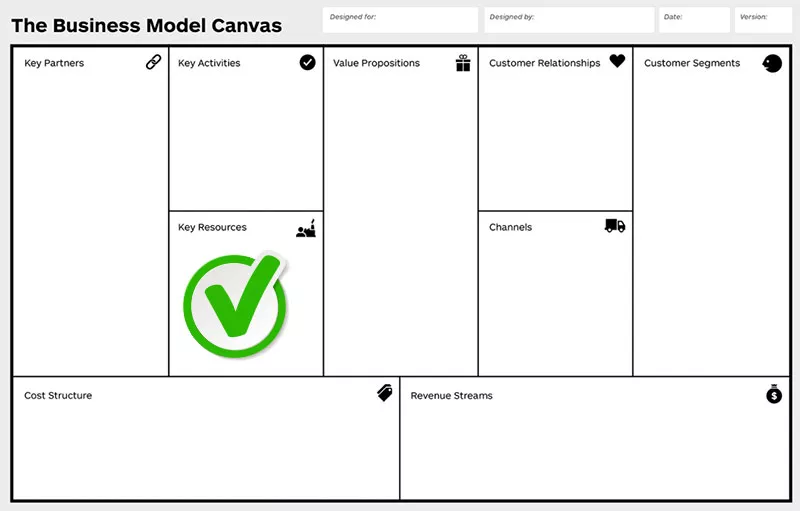
What are the key resources that can set your business apart from the rest? What resources are key to offering your value proposition? Key Resources are the important assets that are available to you and are required to make your business plan a success. These resources allow you to create your unique value proposition, maintain important relationships with your customers, reach new markets, and create revenue. These resources can range from physical, financial, intellectual, or human assets.
7. Key Activities
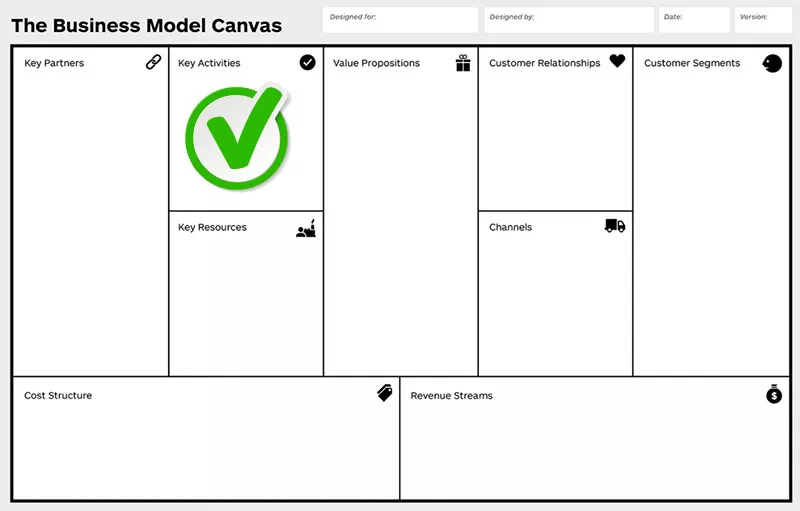
The key activities building block describes the important process that a business must take part in for a business model to work. Much like key resources, these activities are required to maintain customer relationships, reach new markets, create value propositions, and earn revenues. Key activities can be grouped into three categories: 1. Production These key activities are the focus of manufacturing firms and relates to the designing, creating, and delivery of products. 2. Problem Solving These activities include knowledge management and training. Problem-solving is key to coming up with new solutions to customer problems. 3. Platform/Network His category includes platform management, service positioning, and platform promotion. This is built around a company that relies on networks, software, and brands that can function as a platform.
8. Key Partnerships
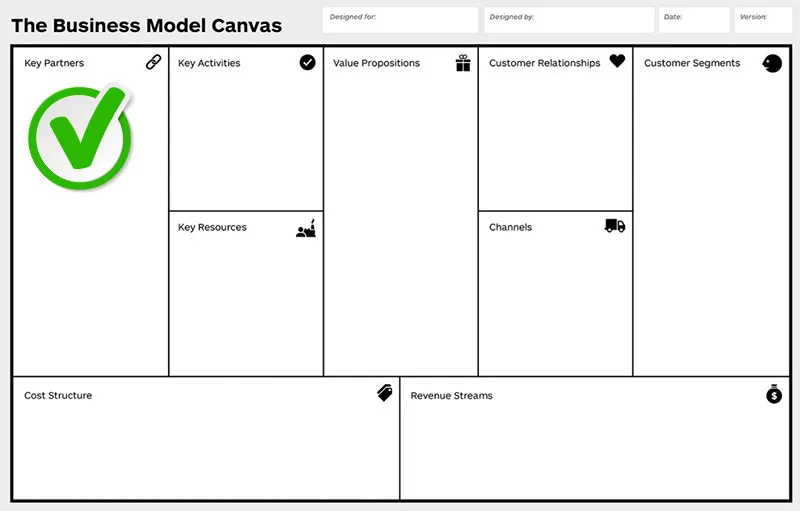
The building block of key partnerships revolves around the network you build. This can include suppliers, partners, or even other businesses in your industry to create an alliance with. There are 4 main categories of partnerships: 1. Strategic Alliances with Non-competitors 2. Strategic Partnerships with Competitors 3. Joint Ventures to create new Businesses 4. Buyer-Supplier Relationships With these 4 categories of partnerships, we find 3 main motives: 1. Optimization and Economies of Scale This motive is based on reducing costs and can involve outsourcing or a sharing infrastructure. This optimizes the allocation of resources and activities so your company doesn’t rely on owning all the resources or performing every activity on its own. 2. Reduction of Risk and Uncertainty This motive is brought on by competitors joining in strategic alliances in one area while remaining competitive in other areas. 3. Acquisition of Resources and Activities It is rare for any business to have access to all the necessary resources and activities to create the most value to their customers. It is important to realize which assets are more cost-effective to outsource and to rely on other businesses to bring resources that you could not come up with on your own.
9. Cost Structure
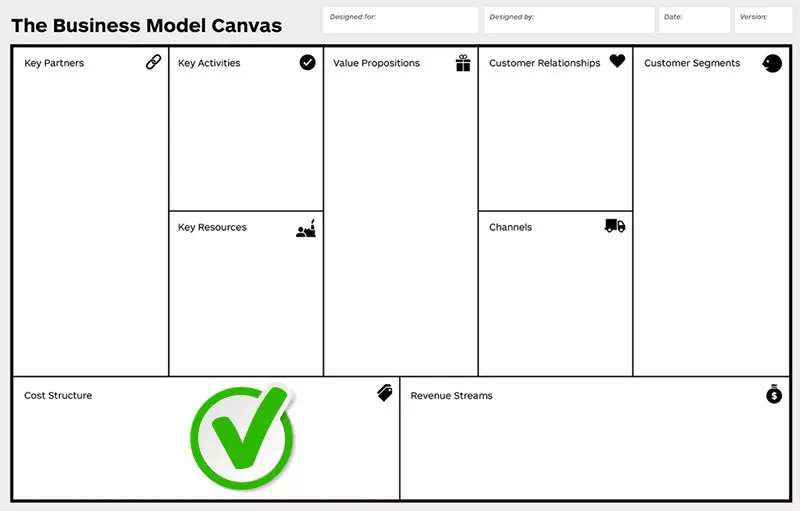
The cost structure building block describes all costs involved in operating a business model. When your business defines how to create value, maintain customer relationships, and generate income, it will see costs incurred on each of these levels. The cost structure of a business can be placed into one of two categories:
1. Cost-driven
This cost structure focuses on minimizing costs wherever possible. This process can include high automation, extensive outsourcing, low price Value Propositions, and the leanest possible cost structure.
2. Value-driven
With the value-driven cost structure, a business focuses on how the create the best value for each customer segment. This can include a highly-personalized service and exclusive services.
That concludes the 9 Building Blocks that go into a Business Model! These building blocks are put together to create a handy tool for your business known as the Business Model Canvas. This model is meant to be a hands-on tool for your whole business team to add and take away items when needed. To print out a poster-sized canvas, please visit www.businessmodelgeneration.com I will leave you with three last instructions to help build your business model:
1. Print it out on a poster!
2. Place the poster on the wall!
3. Sketch out your business model!
**Affiliate Disclaimer** We may earn commissions on links – which help support our writing and does not cost you any extra when clicking through one of our links.


 Want to know how your business stacks up against the competition?





0 Comments